
In 2026, agentic AI systems are rapidly replacing traditional rule-based and prompt-driven chatbots because they can act autonomously, reason across multiple steps, and achieve goals instead of just responding to queries. Traditional chatbots operate in a reactive manner—waiting for user input and generating a single response—often failing when conversations become complex or require decision-making. Agentic AI, on the other hand, is built around goals, memory, and planning. These agents can break tasks into subtasks, decide which tools or APIs to use, monitor progress, and adapt their behavior based on outcomes.
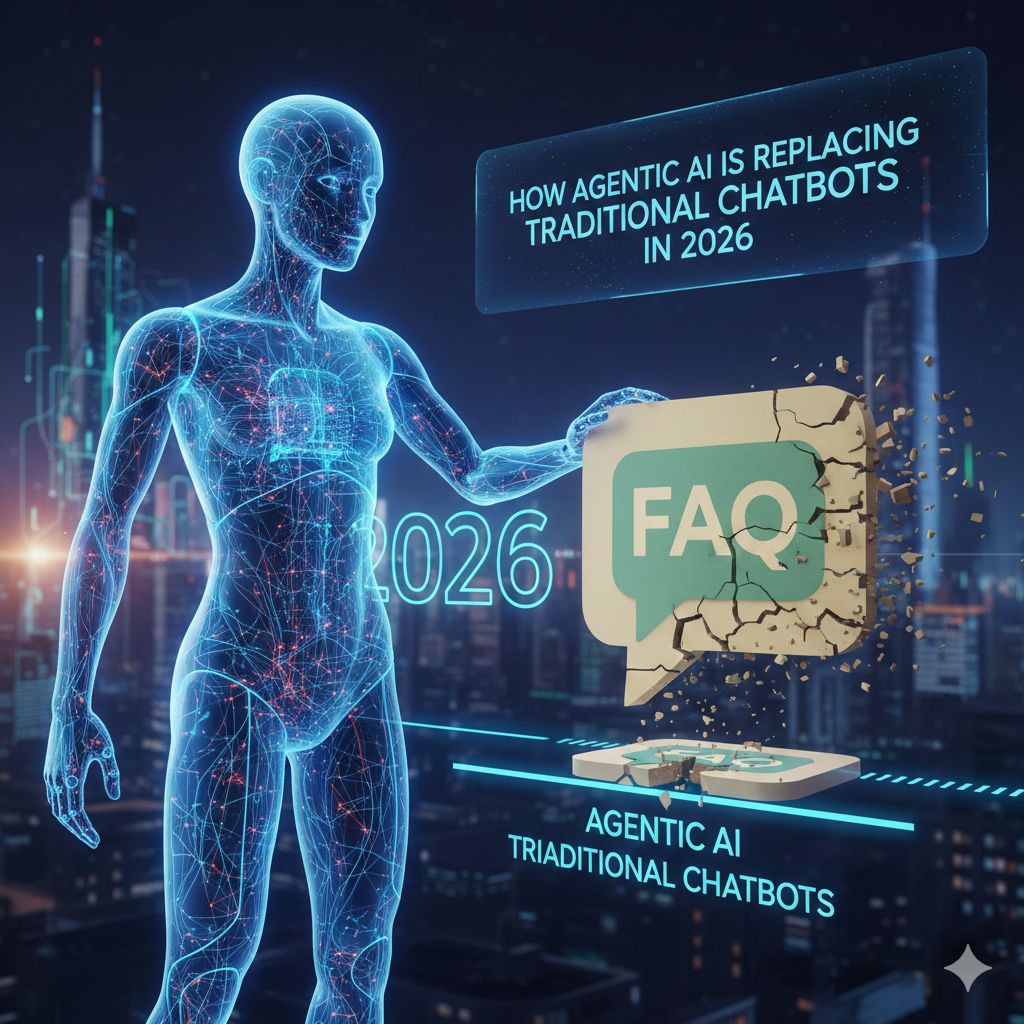
For example, instead of merely answering a question about booking a ticket, an agentic system can compare prices, check availability, handle errors, and complete the booking end-to-end. This shift is driven by advances in large language models, tool-calling capabilities, and long-term memory systems, making AI agents more reliable, context-aware, and useful in real-world business workflows such as customer support, DevOps automation, data analysis, and personalized user experiences.
Building Production-Ready AI Agents: Architecture Patterns and Pitfalls
Building production-ready AI agents requires more than connecting a language model to a prompt—it demands a robust architecture that balances autonomy, control, and reliability. Common architecture patterns include planner–executor models, where one component decides the steps needed to achieve a goal while another executes them using tools and APIs, and multi-agent systems, where specialized agents collaborate on complex tasks. Memory layers—both short-term (conversation context) and long-term (databases or vector stores)—are essential for continuity and personalization.
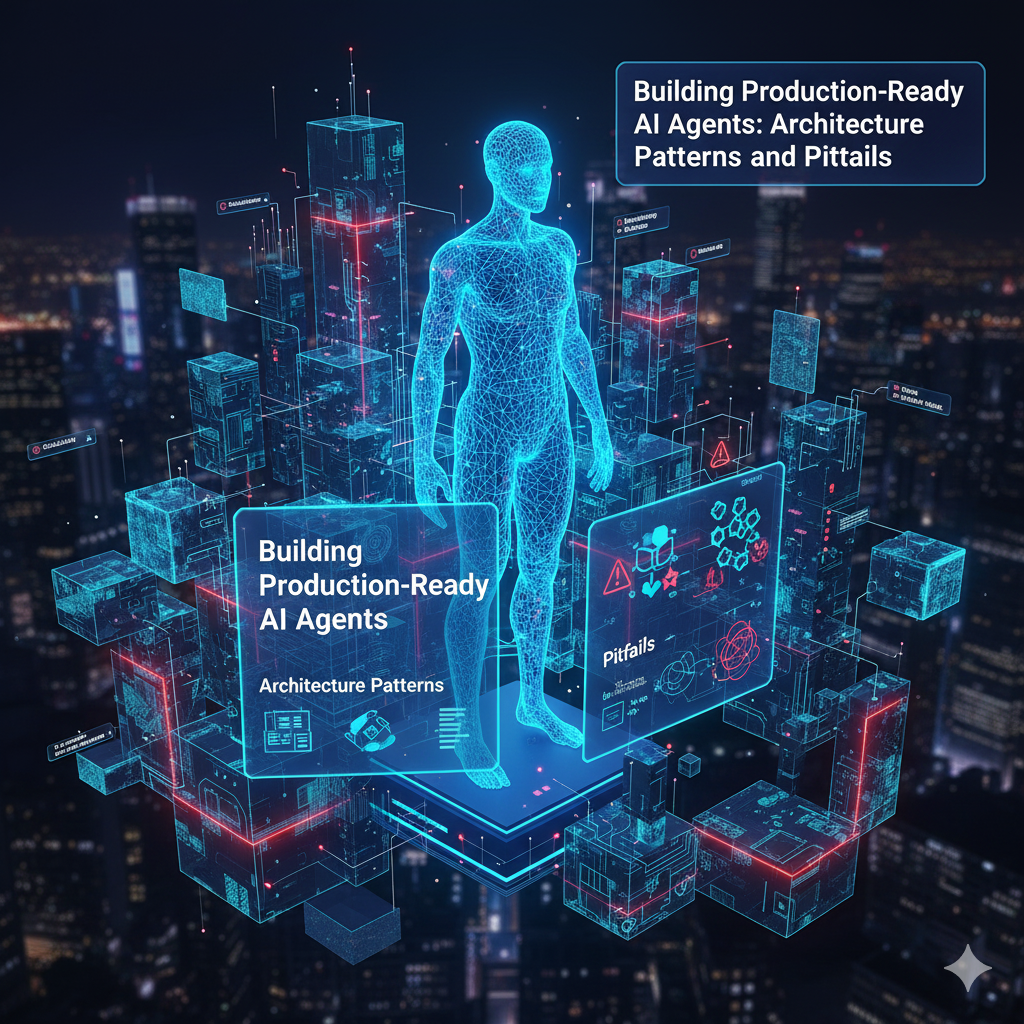
However, several pitfalls must be carefully managed, such as uncontrolled agent behavior, infinite loops, high operational costs, and security risks from unrestricted tool access. Without proper guardrails, monitoring, and fallback mechanisms, agents can make incorrect decisions or fail silently. Successful production systems in 2026 emphasize observability, human-in-the-loop validation, rate limits, and deterministic workflows, ensuring that AI agents remain scalable, safe, and aligned with business objectives rather than behaving unpredictably.
Why Agentic AI Is Better Than Traditional Chatbots
Traditional chatbots are limited because they follow fixed rules or simple instructions. If something unexpected happens, they usually stop or give incorrect responses. Agentic AI is different because it can adapt when things don’t go as planned. If one method fails, it can try another approach, much like a human would. This makes it far more reliable for real-world situations, where problems are rarely straightforward.
Agentic AI can also use multiple tools. It can search the internet, read documents, call APIs, update systems, and even coordinate with other AI agents. For businesses, this means fewer manual steps and less back-and-forth communication. Tasks that once took hours—such as preparing reports, managing customer issues, or organizing workflows—can now be handled automatically with minimal supervision.
In 2026, agentic AI represents a major shift from simple chatbots to intelligent systems that can plan, act, and deliver real results. Unlike traditional chatbots that only respond to questions, agentic AI works toward goals, adapts to changing situations, and completes tasks independently. This makes it far more useful in everyday work, from customer support and business operations to personal assistance.
As organizations adopt this new approach, the focus is no longer just on smarter conversations but on reliable, responsible action. When built with proper safeguards and human oversight, agentic AI becomes a trusted digital partner that saves time, reduces effort, and improves decision-making. Ultimately, agentic AI is not replacing humans—it is empowering them by handling routine tasks and allowing people to focus on creativity, strategy, and innovation.