
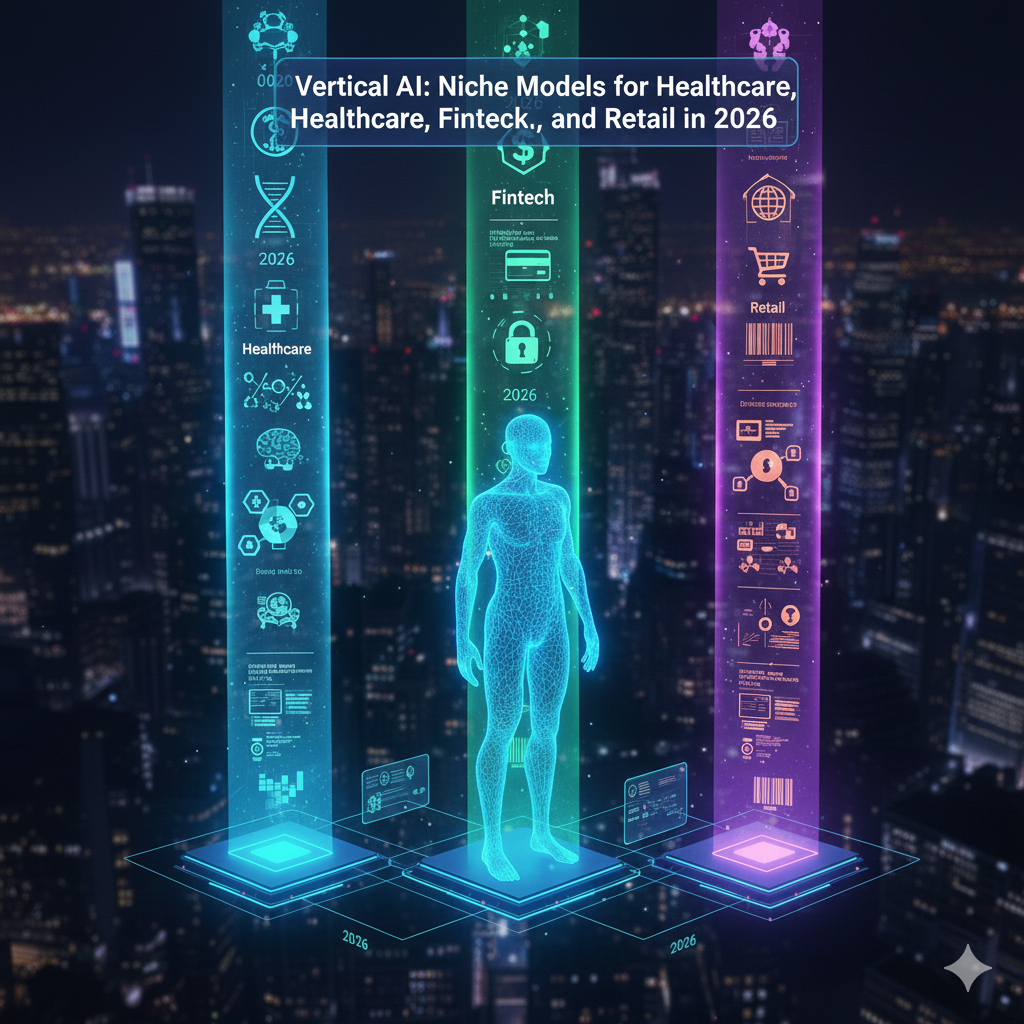
In 2026, Vertical AI is transforming industries by focusing on specific domains rather than general-purpose intelligence. Unlike broad AI models that try to handle many topics at once, vertical AI systems are trained and optimized for one industry. This specialization allows them to understand industry language, rules, and workflows much better, making them more accurate, reliable, and useful in real-world applications.
In healthcare, vertical AI supports doctors and medical staff by analyzing patient records, identifying patterns in symptoms, and assisting with diagnosis and treatment planning. These systems are designed to follow medical guidelines and data privacy rules, helping reduce errors and save time. Rather than replacing healthcare professionals, AI acts as a trusted assistant that improves care quality and speeds up decision-making while keeping humans in control.
In fintech, vertical AI plays a key role in fraud detection, risk assessment, and personalized financial services. Because these models understand financial behavior and regulations, they can spot unusual activity quickly and help institutions prevent fraud. They also power smarter chat support, loan approvals, and investment insights, making financial services faster, safer, and more accessible for users.
In retail, vertical AI helps businesses understand customer behavior and manage operations more efficiently. It predicts demand, optimizes pricing, manages inventory, and delivers personalized shopping experiences. By learning from purchasing patterns and seasonal trends, retail-focused AI helps companies reduce waste, increase sales, and improve customer satisfaction.
Overall, vertical AI in 2026 proves that industry-focused intelligence delivers better results than one-size-fits-all solutions. By deeply understanding the needs and challenges of healthcare, fintech, and retail, niche AI models are enabling smarter decisions, stronger compliance, and more meaningful user experiences across industries.
What Is Vertical AI?
- Vertical AI focuses on one specific industry instead of handling everything.
- It understands industry language, rules, and workflows deeply.
- More accurate and reliable than general-purpose AI models.
- Designed to meet regulatory and compliance needs.
Why Vertical AI Is Important in 2026
- General AI can be too broad and make mistakes in sensitive industries.
- Businesses need trusted, domain-aware AI.
- Improves efficiency without replacing human decision-makers.
- Reduces risks and operational costs.
Vertical AI in Healthcare

- Analyzes patient records and medical history.
- Assists doctors with diagnosis and treatment suggestions.
- Helps detect diseases earlier through pattern recognition.
- Follows strict data privacy and healthcare regulations.
- Reduces paperwork and administrative workload.
- Supports hospitals in scheduling and resource management.
Vertical AI in Fintech
- Detects fraud and suspicious transactions in real time.
- Improves credit scoring and risk assessment.
- Automates customer support with finance-aware AI.
- Ensures compliance with financial regulations.
- Provides personalized banking and investment advice.
- Speeds up loan approvals and financial decisions.
Vertical AI in Retail
- Predicts customer demand and buying trends.
- Manages inventory and reduces stock shortages.
- Offers personalized product recommendations.
- Optimizes pricing based on market behavior.
- Improves supply chain planning.
- Enhances customer experience across online and offline stores.
Key Benefits of Vertical AI
- Higher accuracy and fewer errors.
- Faster decision-making.
- Better customer experiences.
- Industry-specific compliance built in.
- More trust compared to generic AI tools.
Challenges of Vertical AI
- Requires high-quality, industry-specific data.
- More expensive to develop than general AI.
- Needs regular updates to match changing regulations.
- Must be monitored to avoid bias or errors.
Conclusion
The future of AI lies in deep expertise, not broad intelligence.
In 2026, Vertical AI is becoming the preferred choice for critical industries.
Specialized models outperform general AI in accuracy and trust.
Vertical AI empowers professionals rather than replacing them.